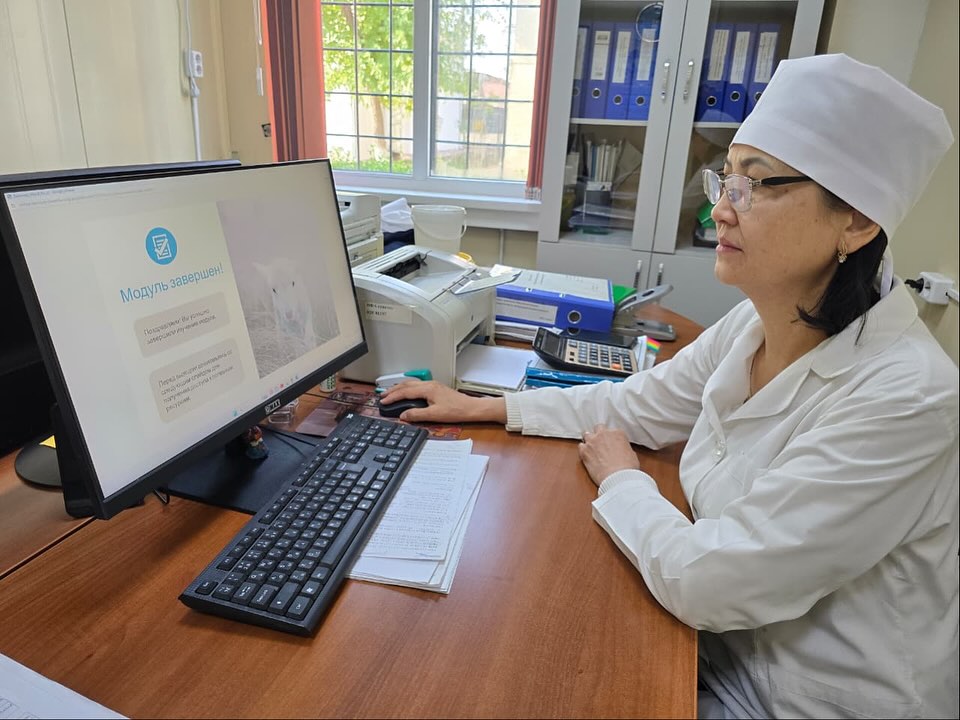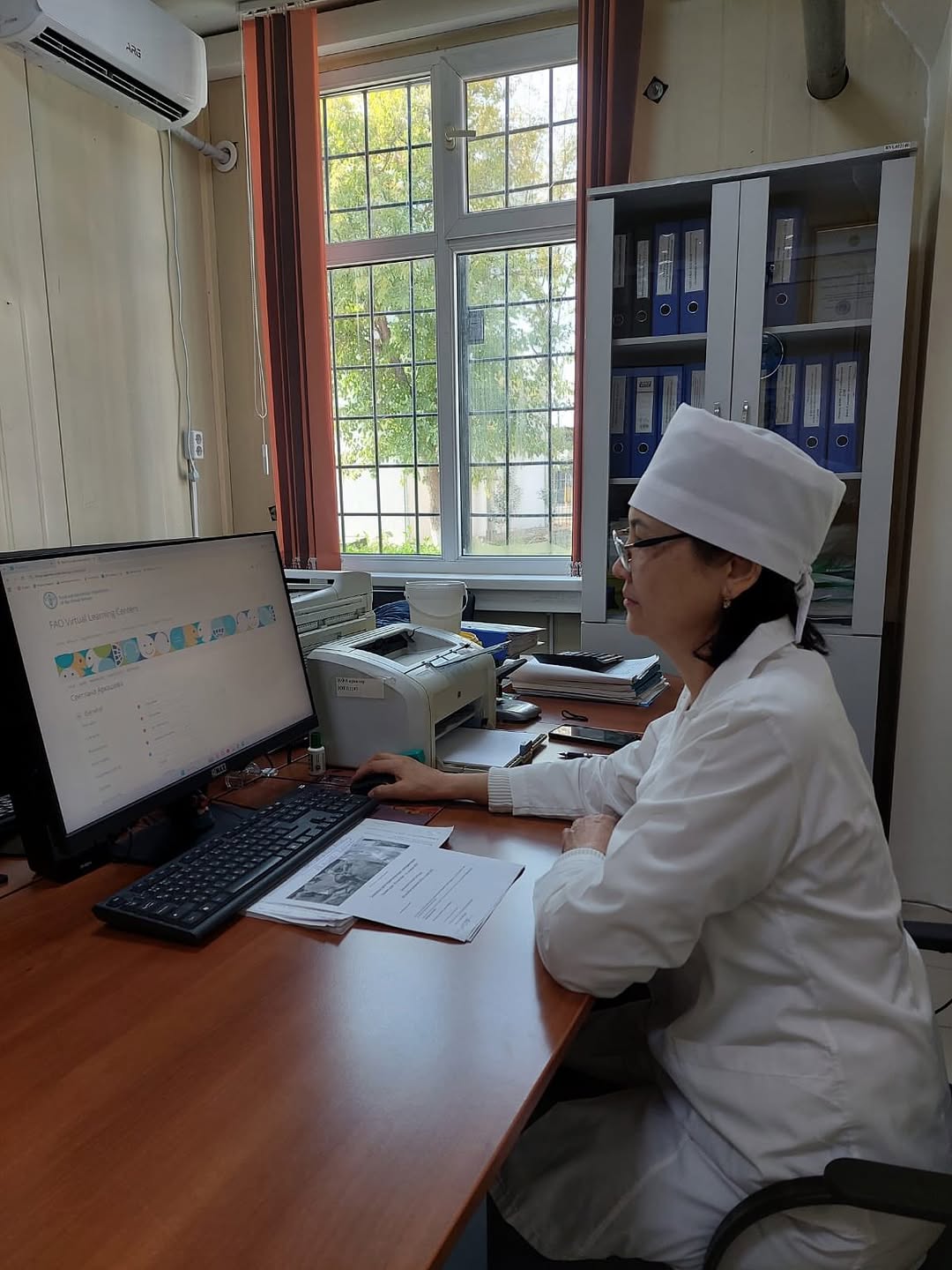
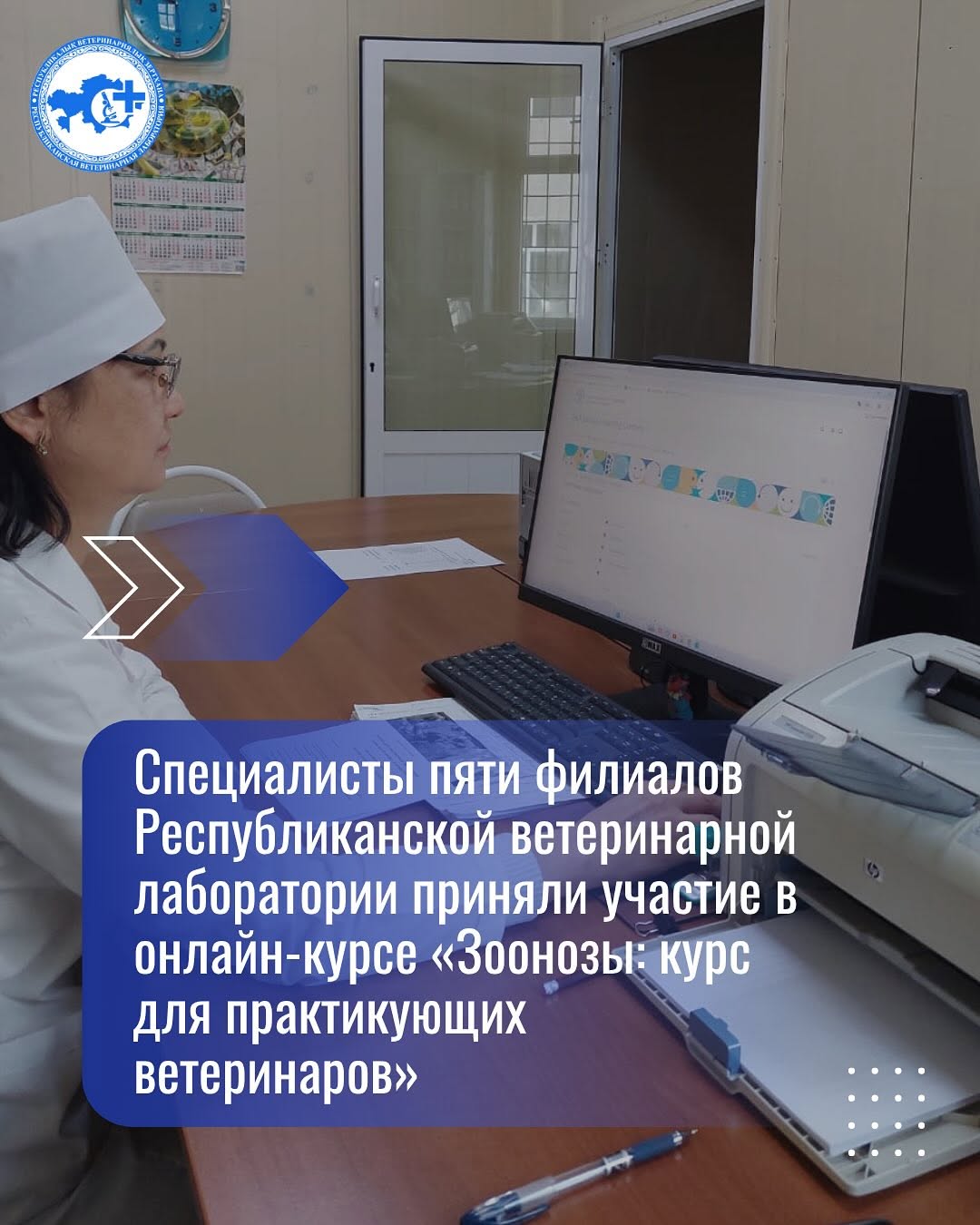
The course was developed by FAO’s Regional Representation in Europe and Central Asia (ECA) in cooperation with the Autonomous University of Barcelona (UAB) and the Swedish University of Agricultural Sciences (SLU).
The course programme included the study of topics such as:
• the concept of United health and the importance of the interdisciplinary approach;
• the impact of zoonotic diseases on the health of the population and the economy;
• methods of field investigation of zoonotic outbreaks;
• priorities for sampling and risk assessment of disease transmission;
• the basics of biosecurity when working with potentially hazardous biomaterials.
General Director of the Republican Veterinary Laboratory Temirhan Amantayevich Elshibayev noted that the participation of employees in FAO’s international training programs is an important component of professional development of specialists. He stressed that such initiatives contribute to the introduction of advanced international experience, improvement of epidemiological supervision and enhancement of the preparedness of the veterinary service to respond to zoonotic threats.
Thus, the participation of laboratory specialists in the course was another step in strengthening human resources and developing a national biosecurity system aimed at protecting animal and human health.